

Romane Glorieux
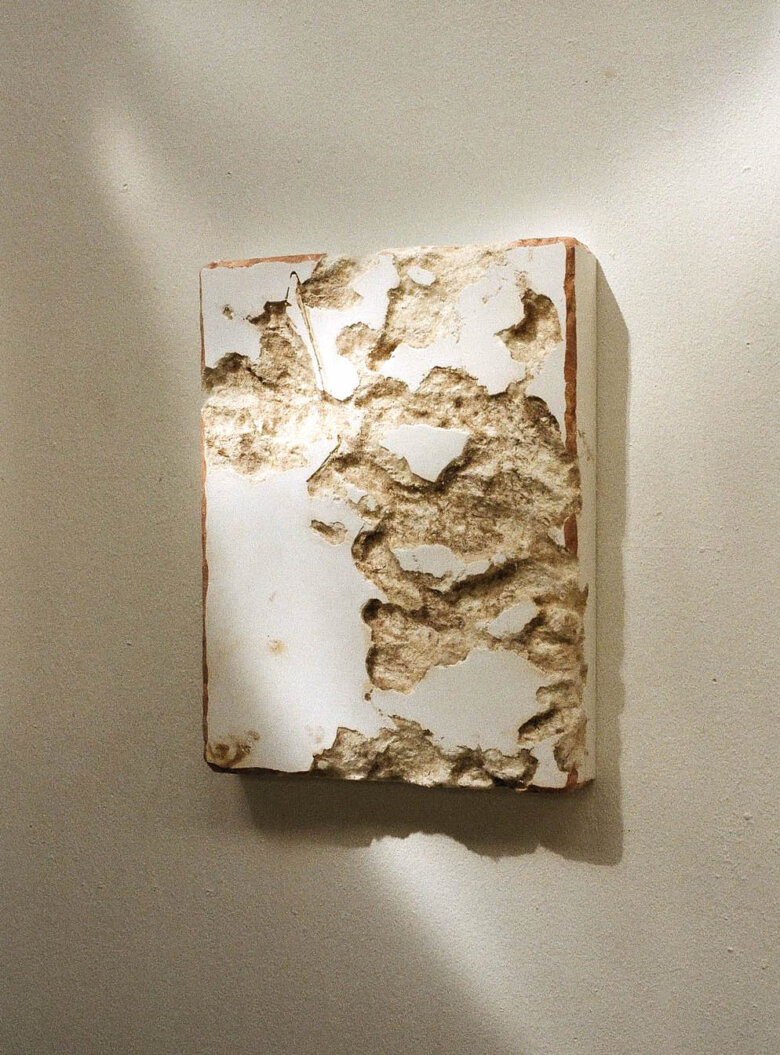
Born in 2000 and a 2025 graduate of the DNSEP from the Haute école des arts du Rhin (HEAR) in the textile design program, Romane Glorieux lives in the Thann valley and has been working in a studio at Motoco since completing her studies.
Her work questions the connections between different species and explores the relationships between animality and the human condition, addressing traces, the passage of one and the other, and the memory of their possible presence—what remains and what will later disappear. There may be only ephemeral creations destined to vanish over time, to return to the earth, to transform again into raw material, to decompose and slowly disintegrate.
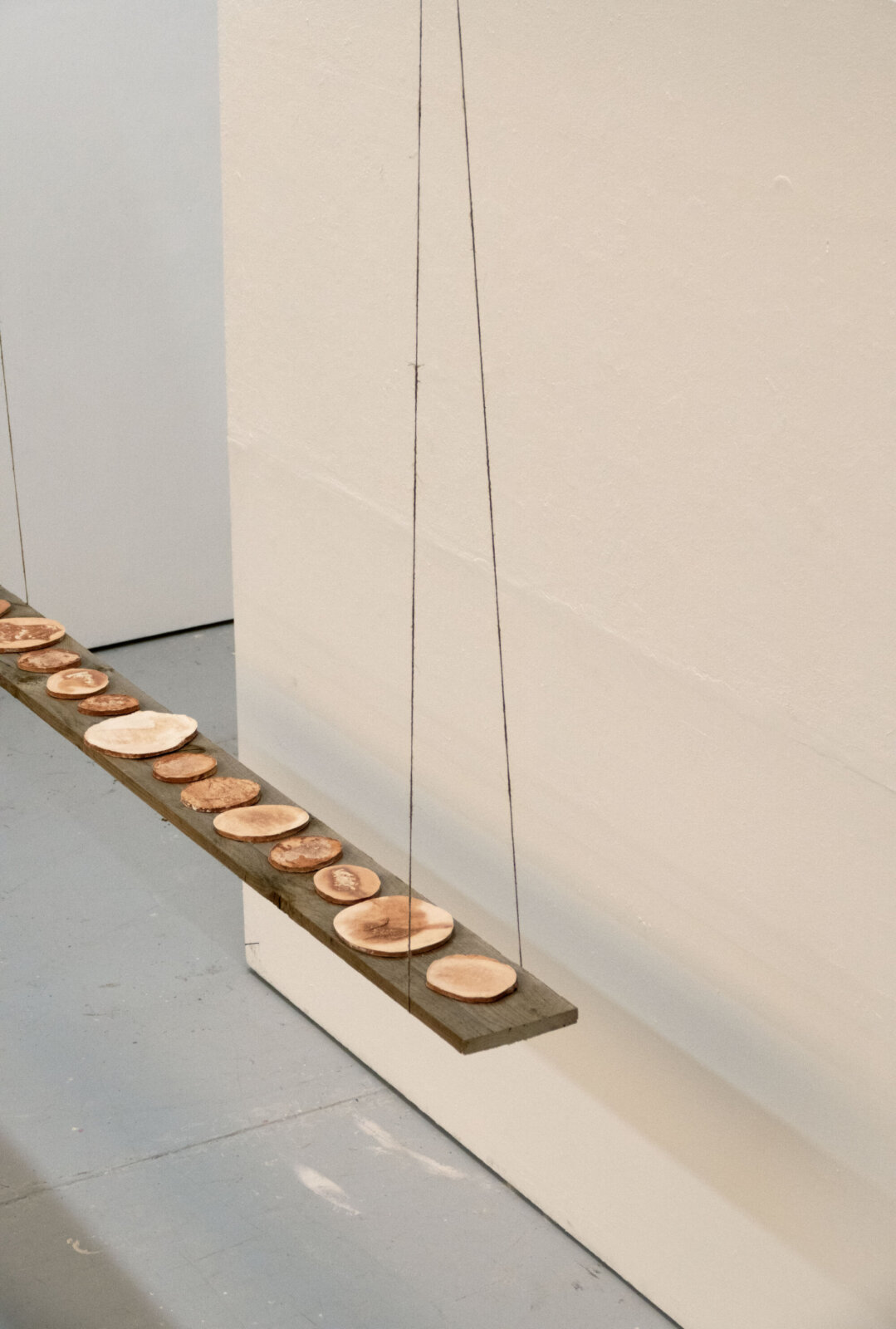
Her practice begins with a search for materials within her territory—much of it earth gathered here and there—which she then works with in its entirety, from collection to firing. The transformation process of her materials marks the beginning of each of her productions.
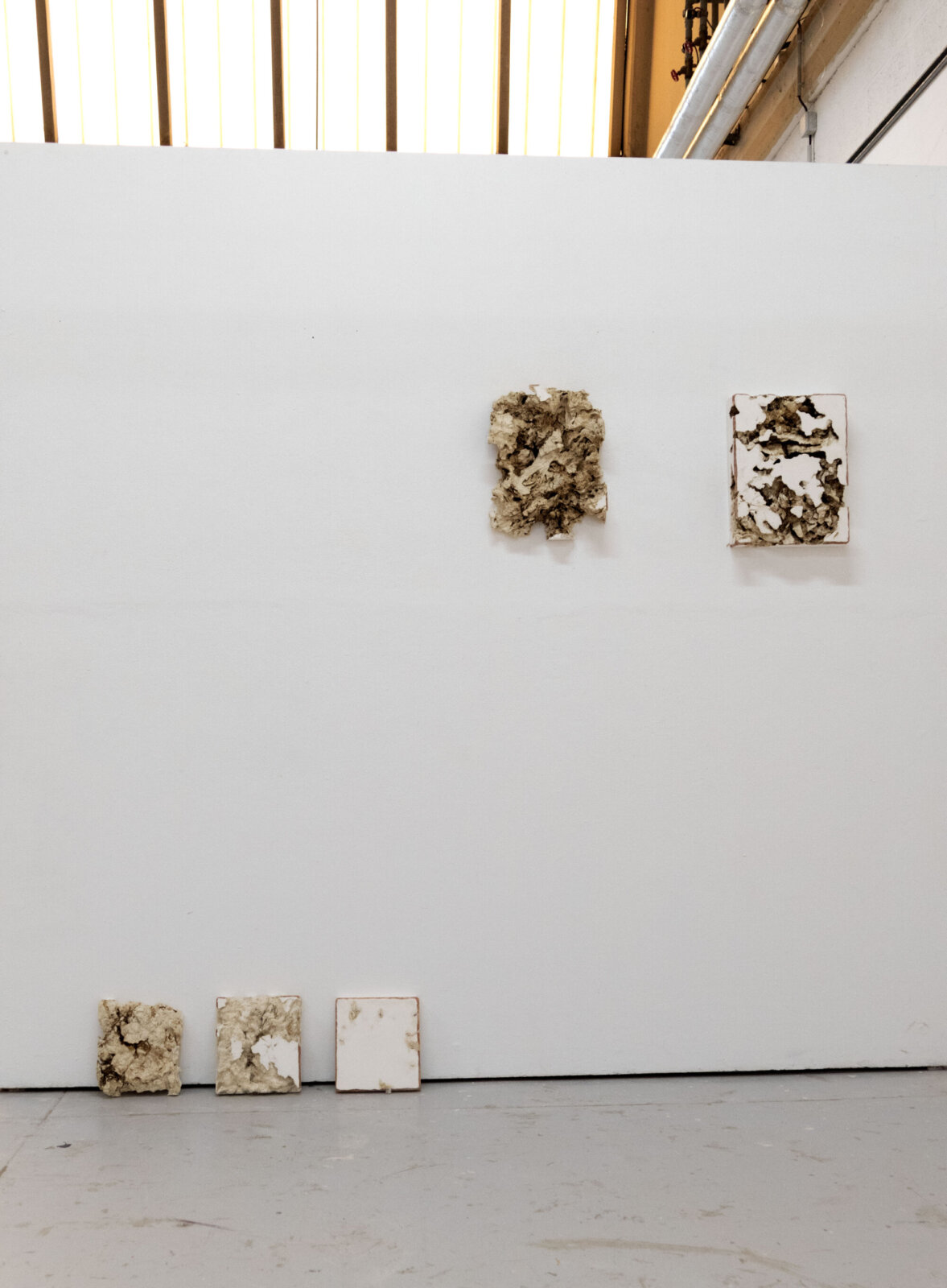
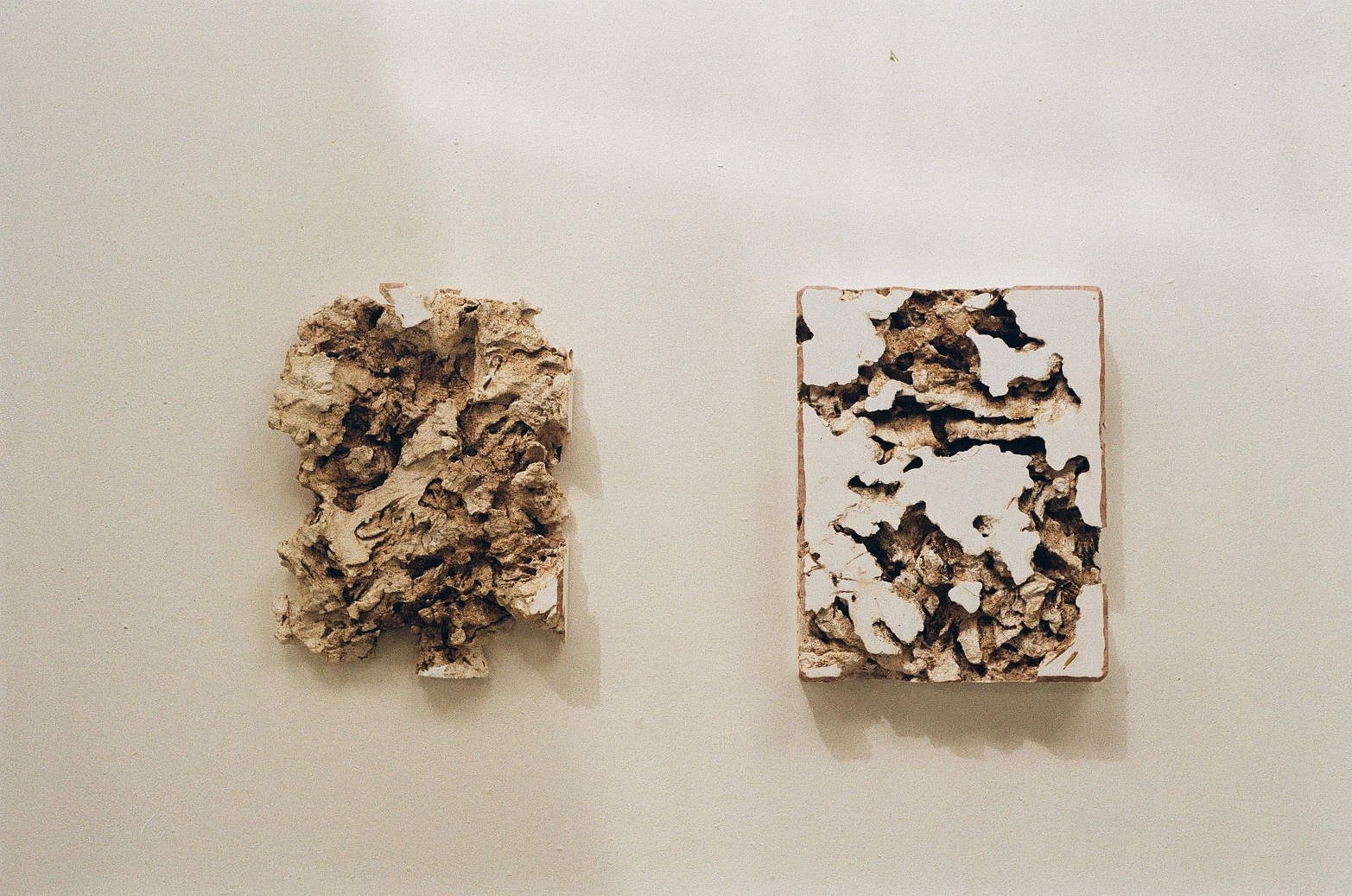
Through several techniques such as mold-making, taking impressions, and casting in clay and plaster, Romane develops an almost archaeological practice. An archaeology of memory created entirely by hand, since her traces are in fact inventions—assemblages drawn from her imagination and from materials collected in her environment.
Writing holds an equally important place in her practice: telling gestures and memories, creating stories from the remnants of reality, and building an archive of her own memory in order to remain connected to what exists and what once existed—perhaps out of fear of forgetting, of disintegrating in turn.
“To build in order to deconstruct, to create and then destroy in memory of what is no longer there, to remake again, to make it seem as if everything has not disappeared. Perhaps there are only forms that do not wish to be forms, composed and then decomposed to create new ones again, to give voice to bodies that no longer speak, between matter and materials, the living and the mineral. Here, raw wool in plaster, removed, torn away as if trying to escape, to flee confinement, yet traces—fragments of its presence—remain. They will never truly leave; they will always be a little bit there, until the plaster itself crumbles in turn, breaks apart, and one day (re)becomes a fragment.”