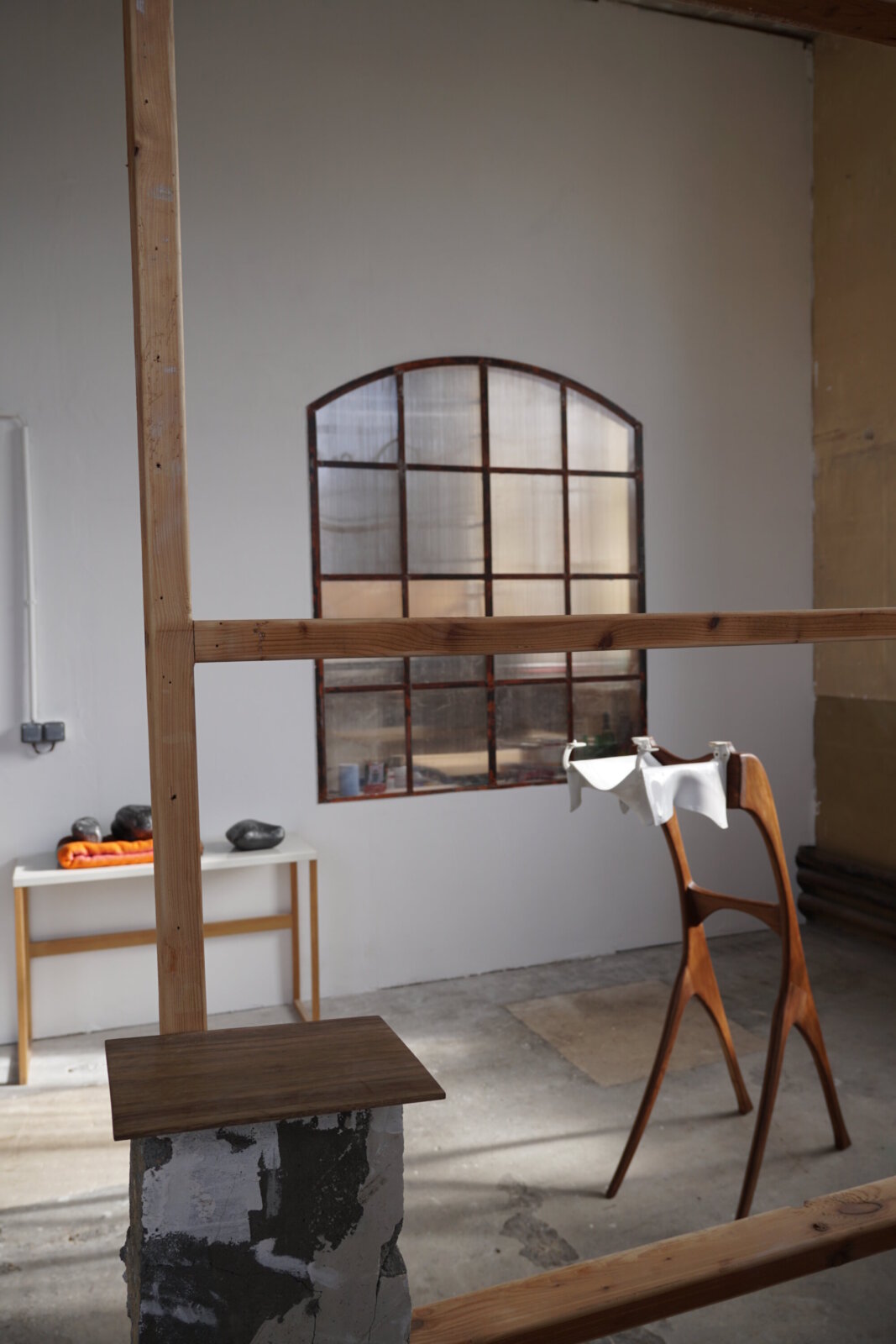
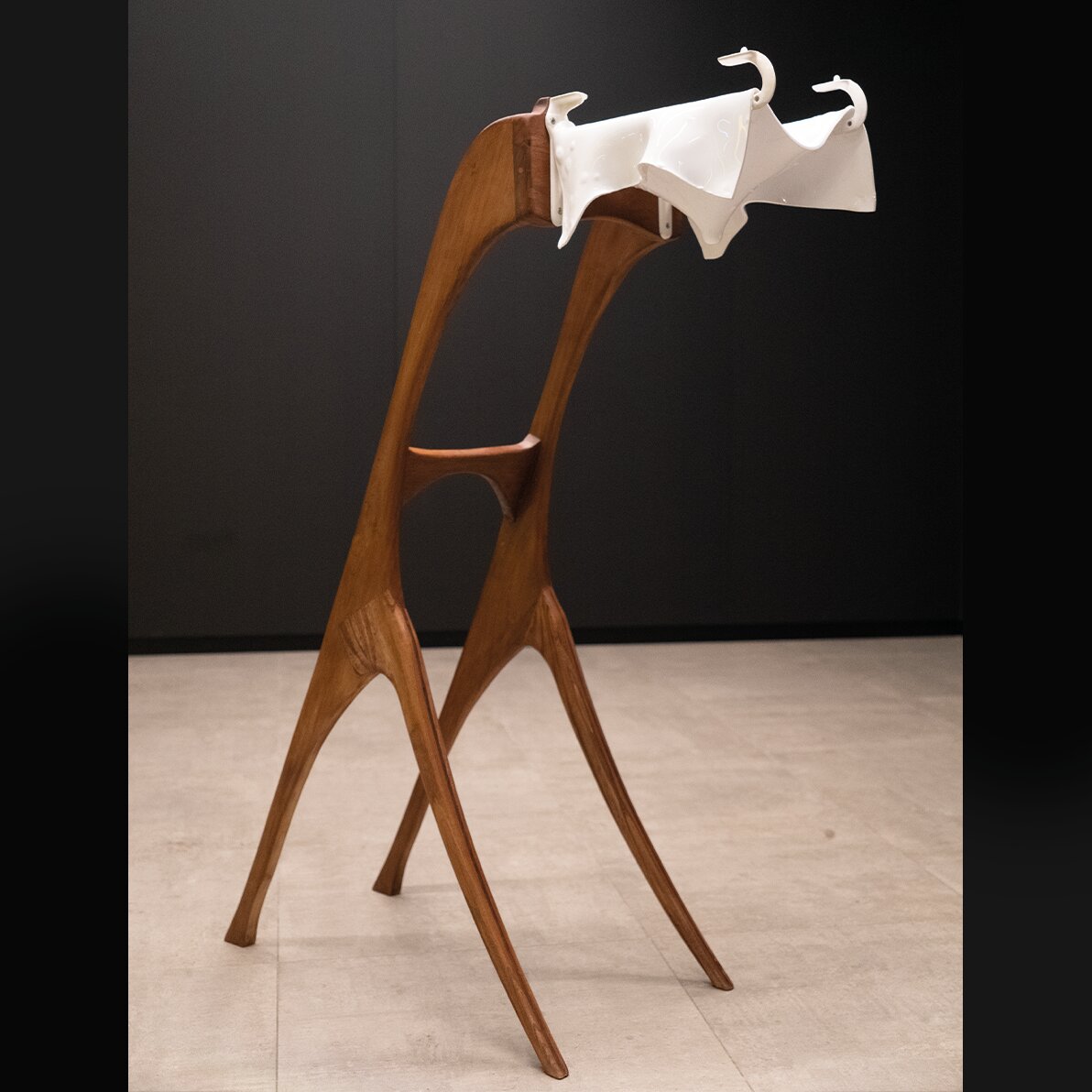
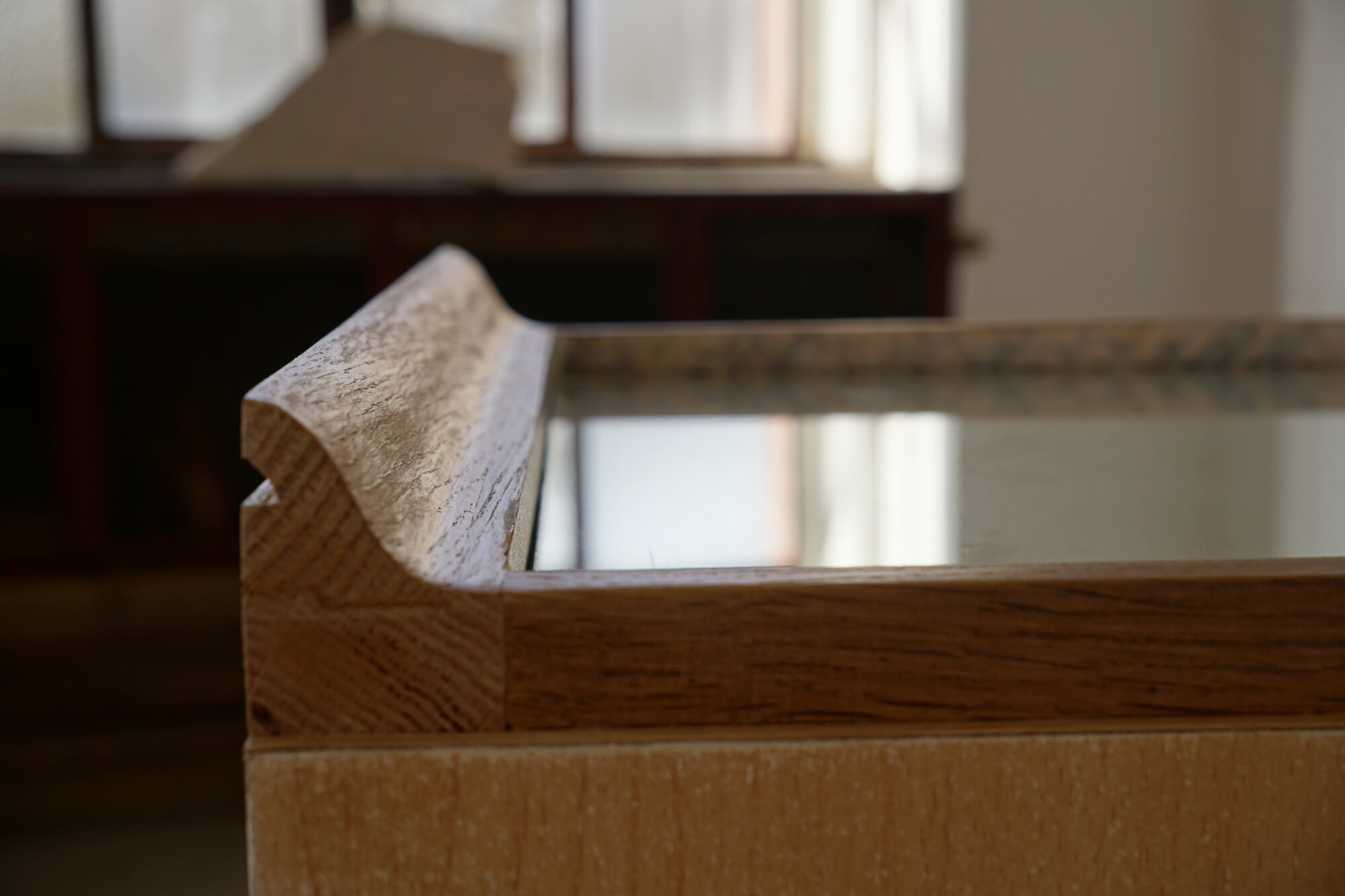
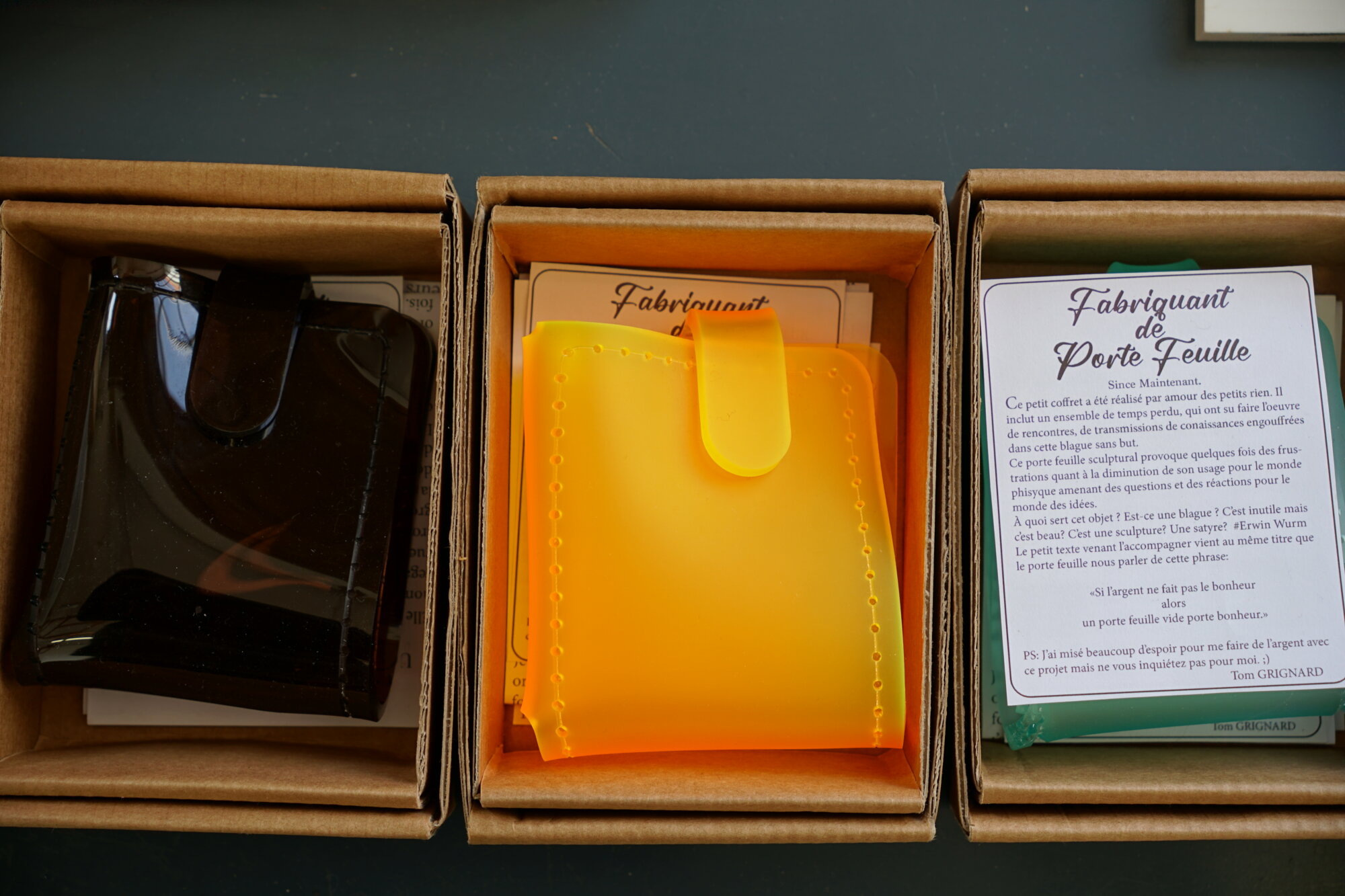
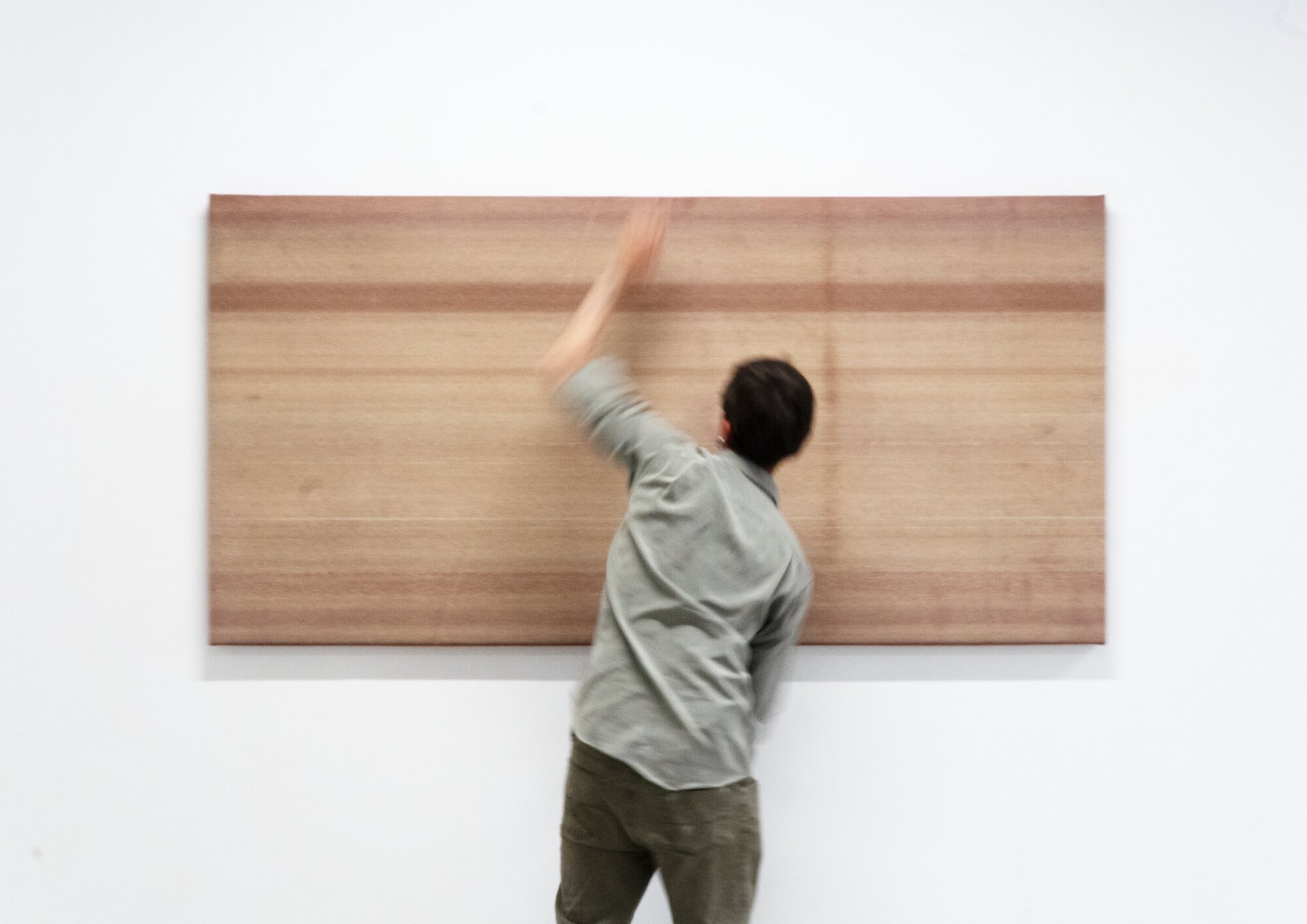
Tom’s story is first and foremost a story of love for objects. The small ones, the simple ones, the insignificant ones the ones people forget. In them, he finds an exceptional richness.
It all begins in his family’s flea-market business in the countryside around Nantes. The son of a schoolteacher mother and an antique-dealer father, he learns to marvel at what surrounds him and at what others fail to see. He learns to restore, repair, and build. A manual craft that will guide his choices.
An initial training in cabinetmaking gives him a taste for hard work. He discovers a multitude of gestures. He learns to listen to the material, to understand it, to work with it. This sense of rigor and humility toward his subjects pushes him beyond cabinetmaking and into the fascinating world of manual labor. There, he discovers new ways of approaching work and a vast field of research. Without knowing it, he is laying the foundations of what will soon become his artistic practice.
Little by little, he feels that manual labor alone is no longer enough. He wants to go further he wants to rediscover what lies behind the objects around him, beyond their fabrication: their stories and the meaning of their existence.
He turns toward the art world. Drawing on his experience, he creates a meeting point between worker and artist: he shapes, assembles, and creates treasures. He remains faithful to these two aspects of who he is by forming partnerships—sometimes loosely defined—with companies. Far from the stereotype of the “artist invited into factories” (often criticized by employees), he integrates himself humbly into the workplace. He seeks to understand before sharing his artist’s perspective. He builds a bridge between two worlds, each often viewing the other with suspicion, yet tinged with fascination. He uses his quest for knowledge to nourish his artistic practice by embracing his own ignorance.
This ignorance he has conceptualized through a character dear to him, one that appears regularly in his work: the idiot. Guided by the saying, “the dumber it is, the more interesting it is,” he uses the idiot to develop an offbeat way of thinking, filled with a sharp absurdity. He traces it back to its Greek root, ἴδιος (idios) a term referring to someone simple, with their own system of thought. The idiot is the one who looks the other way, who is singular, on the margins. Their value lies in their difference of perspective. They offer a vision others do not have. Through Tom, the idiot mocks conventions. He searches for meaning by going against the current.
He joined Motoco with Onni dv (whom we will introduce soon) after many adventures they experienced together. After passing through Annecy and Brussels, they created and joined squats that later became spaces for artistic production. In 2025, they decided to hit the road for a tour of cultural venues across France. Their stop in Mulhouse allowed them to discover Motoco. A few months later, Tom and Onni moved into a new studio, freshly renovated and arranged by their own hands a space reworked with “one room to show and one room to get dirty.”